Budget 2025 Signals Return to Hard Power

The federal government’s 2025 budget has finally been released, and the contents are promising for the Canadian Armed Forces (CAF). Chapter Four of Canada Strong 2025 highlights initiatives the government is taking to safeguard Canada’s sovereignty and security. Russian aggression against Ukraine and China’s growing ambitions of global dominance were cited as primary motivations.

One particularly refreshing passage says: “In this period of great power competition and geopolitical uncertainty, Canadian leadership in the world will be defined not just by the strength of our values, but also by the value of our strength. The significance of this quote cannot be overstated. Finally, the Canadian government is acknowledging that hard power matters and that Canada needs to have some of its own.

As expected, the government promised to re-equip and re-arm the CAF, reaffirming its pledge to meet Canada’s NATO commitment of 2% of GDP spending this year, with an increase of $9 billion. The budget also confirmed the government’s commitment to reach 5% of GDP spending on defence by the mid-2030s.

The government is also finally cracking down on illegal drugs and gun trafficking, hiring 1000 new RCMP police officers and another 1000 CBSA border officers.

“Our Canadian Armed Forces are among the best in the world, and they deserve the capabilities necessary to succeed in an increasingly challenging threat environment.”

The following is a list of planned expenditures over the next five years, as outlined in the budget:

  • $81.8 billion over five years on a cash basis, starting this year, to rebuild, rearm, and reinvest in the CAF, which includes the $9 billion mentioned above. This is broken down as follows:
    • $20.4 billion over five years to recruit and retain a strong fighting force, including generational pay raises for the CAF, and CAF health care improvements.
    • $19.0 billion over five. Years to repair and sustain CAF capabilities and invest in defence infrastructure, including expanding ammunition and training infrastructure.
    • $10.9 billion over five years for upgrades to DND, CAF, and CSE digital infrastructure, including those needed for modern warfare, such as cyber defence.
    • $17.9 billion over five years to expand Canada’s military capabilities, including investments in additional logistics trucks and armoured vehicles, counter-drone and long-range precision strike capabilities (HIMARS system), and domestic ammunition production.
    • $6.6 billion over five years to expand Canada’s defence partnerships, including expanded military assistance to Ukraine and increased military training and international policy programming.
    • $805 million over five years to the Canadian Coast Guard, CSIS, Public Services, and Procurement Canada for complementary initiatives to support Canada’s defence capabilities.

Analysis

Unfortunately, the budget document does not provide a detailed breakdown of how the influx of funding will be spent. To put things into perspective, I’ve pulled together all the major procurement announcements I could find over the past five years to try and pain a complete picture of what this increase in funding will mean to the CAF in a real sense. I will cover veterans, the new Defence Investment Agency, and the planned procurements for the Royal Canadian Navy, the Royal Canadian Air Force, and the Canadian Army to provide a more detailed understanding of the equipment Canada’s military will receive over the coming years.
Support for Veterans

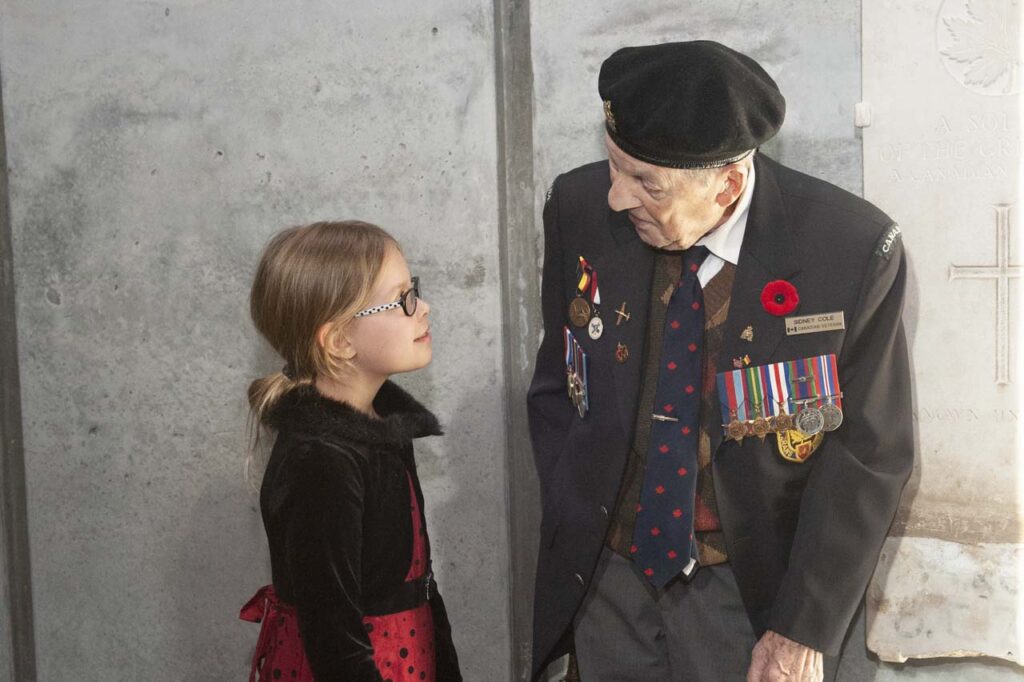
The budget also allocated an additional $395 million over six years, starting in 2025-26, to enhance support for veterans and their families. This funding supports continued work on reducing wait times for disability benefits, improving digital service delivery, and expanding case management capacity. The document specifically references ongoing recruitment for frontline VAC staff to maintain timely service delivery for veterans accessing health and income-support programs.

Additionally, the budget allocates $15 million over five years to expand mental health and transition programs, including the Veteran and Family Well-Being Fund. This supports projects focused on suicide prevention, PTSD treatment, and reintegration assistance. There is also mention of continued funding for homelessness prevention initiatives, building on prior allocations from 2023 aimed at ensuring access to housing and support services for at-risk veterans.

A New Defence Investment Agency

The 2025 budget establishes a new Defence Investment Agency (DIA) to overhaul and centralize Canada’s defence procurement system. The move responds to longstanding problems—slow timelines, fragmented responsibilities, and weak coordination between government, industry, and the Canadian Armed Forces (CAF).

The DIA’s mandate is to streamline major procurements, focus investment on strategic defence industries, and strengthen collaboration between the military and domestic suppliers. Its three core goals are: consolidating procurement processes to cut red tape and accelerate project approvals; targeting spending to stimulate key sectors such as aerospace, shipbuilding, and advanced manufacturing; and enabling early, structured engagement between the CAF and Canadian industry to align operational needs with realistic industrial capabilities and timelines.

To launch the Agency, $30.8 million over four years (beginning in 2026-27) and $7.7 million in ongoing annual funding are allocated to Public Services and Procurement Canada. The DIA will manage major defence projects valued at over $100 million, including submarine acquisitions and other high-priority capabilities.

An additional $52.5 million over five years, with $12.2 million ongoing, will modernize and expand the Industrial Security Program to support the Agency’s work and ensure Canada’s defence industry can meet the security and capacity standards required for advanced military production.

In short, the Defence Investment Agency will become the central hub for large-scale military acquisitions, aiming to deliver equipment faster, strengthen Canada’s industrial base, and ensure better value for taxpayers.

This looks like an excellent idea on paper, and if the government can pull it off, it will do much to speed up our horrific procurement process, but there remain risks that need to be managed accordingly. For example, this new agency simply amalgamates familiar actors from other government departments. Similar bickering, infighting, and risk aversion could be brought forward into this new agency if the culture is not managed effectively, which is to say, strong leadership from the top down must ensure that the Defence Investment Agency does not transform itself into yet another self-serving bureaucracy.
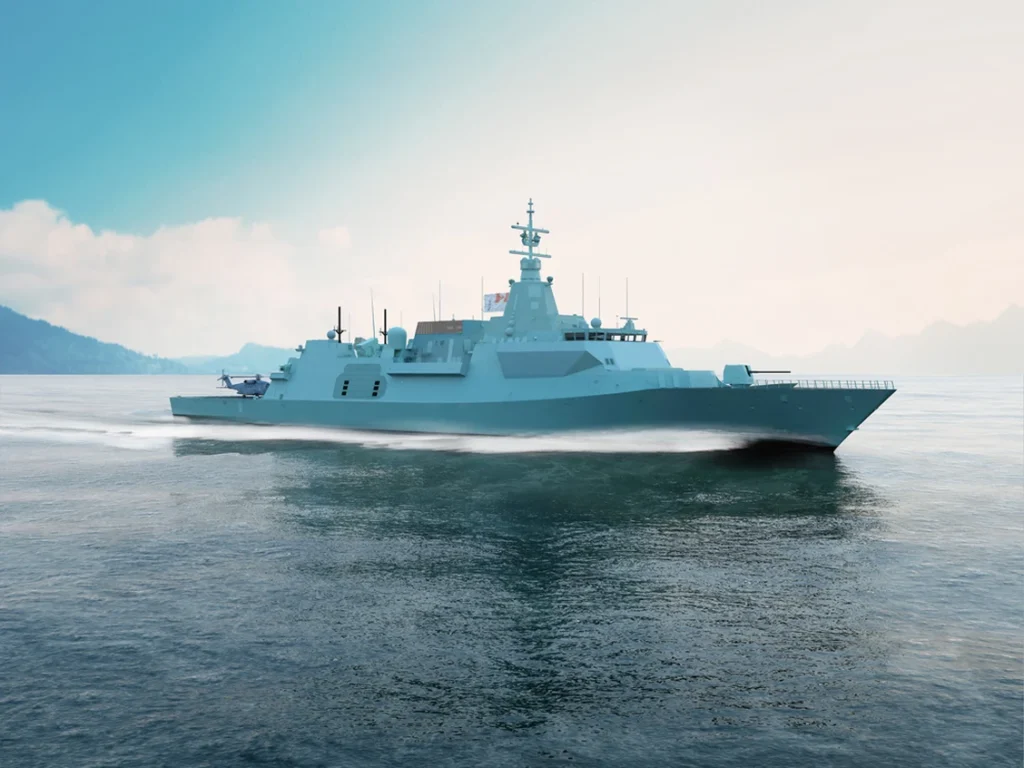
River Class Type 26 Destroyer

Royal Canadian Navy (RCN)

The 2025 federal budget signals a period of sustained naval modernization for Canada, continuing the long-term transformation that began under the National Shipbuilding Strategy. Over the next decade, the Royal Canadian Navy is positioned to replace or upgrade nearly every class of major vessel it operates, marking one of the most comprehensive renewal efforts in its history.

The Harry DeWolf-class Arctic and Offshore Patrol Ships remain a central feature of this modernization. Designed for Arctic sovereignty patrols, disaster response, and global operations, the six-ship fleet has now reached the final stages of construction. The sixth and final vessel, the future HMCS Robert Hampton Gray, launched in December 2024 and was officially named in August 2025. These ships provide the Navy with a modest ability to operate in Canada’s northern waters for extended periods, partially filling a capability gap that existed for decades. However, these ships don’t have much in the way of weapons system, making them little more then ice strengthened Coast Guard type ships.

Alongside the patrol fleet, the government has advanced the Canadian Surface Combatant program, based on the British Type 26 design, known as the River Class destroyer in Canada. Construction began in 2024, and the first implementation contract was awarded in early 2025 for the initial three ships. Full-rate production is now under way at the Irving Shipbuilding facility in Halifax. When completed, this new class will replace the aging Halifax-class frigates, becoming the backbone of Canada’s surface fleet of 15 destroyers and its most capable combatants. The new River class Destroyer, in my humble estimation will be one of the most formidable destroyers on the high seas when it comes into service. It specializes in anti-submarine warfare (ASW), packs a robust air defence system, enhanced sensors, and much more firepower than the Halifax class frigates.

The Protecteur-class Joint Support Ships are also progressing steadily. Built at Seaspan Shipyards in Vancouver, these large replenishment vessels will restore Canada’s global at-sea resupply capability, which was lost when the Protecteur and Preserver auxiliary ships were retired. The first of the new ships is scheduled for delivery in 2026, with the next in 2027, re-establishing a crucial logistics link for international deployments and humanitarian missions.

The new Protecteur-class Joint Support Ships represent a major advancement over the two auxiliary oiler replenishment vessels they replace, the original HMCS Protecteur and HMCS Preserver. The previous ships, launched in the late 1960s, had limited replenishment capacity, minimal self-defence capability, and aging propulsion systems that restricted global deployments. The new class is larger, faster, and more versatile, combining fuel and supply functions with advanced command, control, and medical facilities that allow the ships to support fleet operations and humanitarian missions worldwide. Modern propulsion and automation systems reduce crewing demands and increase range and endurance, while integrated defensive sensors and weapon mounts significantly enhance survivability. Designed to NATO standards and built to support both Arctic and blue-water operations, the new Protecteur-class restores a sovereign at-sea replenishment capability and adds far greater flexibility, endurance, and safety to the Royal Canadian Navy’s global missions.

Perhaps the most strategically significant announcement came in 2024 with the Canadian Patrol Submarine Project, which initiates the process of acquiring up to 12 conventionally powered, under-ice-capable submarines. The new boats are intended to replace the Victoria-class fleet and will extend Canada’s surveillance and deterrence reach into Arctic and North Atlantic waters. The project is moving along quickly, with the list of potential submarines down to two: the German-Norwegian type 212CD, and the South Korean KSS III Batch II. Either choice represents a robust leap forward in naval combat capability, and the government may select a winner by the end of the year.

The Navy is also preparing for a generational transition in its coastal forces. The Kingston-class Maritime Coastal Defence Vessels, which have served since the mid-1990s, will begin retiring in 2025, with the process continuing through 2028. While the government has not yet announced a formal replacement program, planning is underway for a future class of multi-mission corvettes capable of mine countermeasures, coastal patrol, and intelligence collection.

Together, these programs represent a sweeping renewal of the Royal Canadian Navy’s fleet, ensuring that Canada will possess modern, flexible, and globally deployable maritime capabilities. From Arctic patrols to deep-water combatants and future submarine operations, the budget continues to prioritize naval readiness and the protection of Canada’s maritime interests.
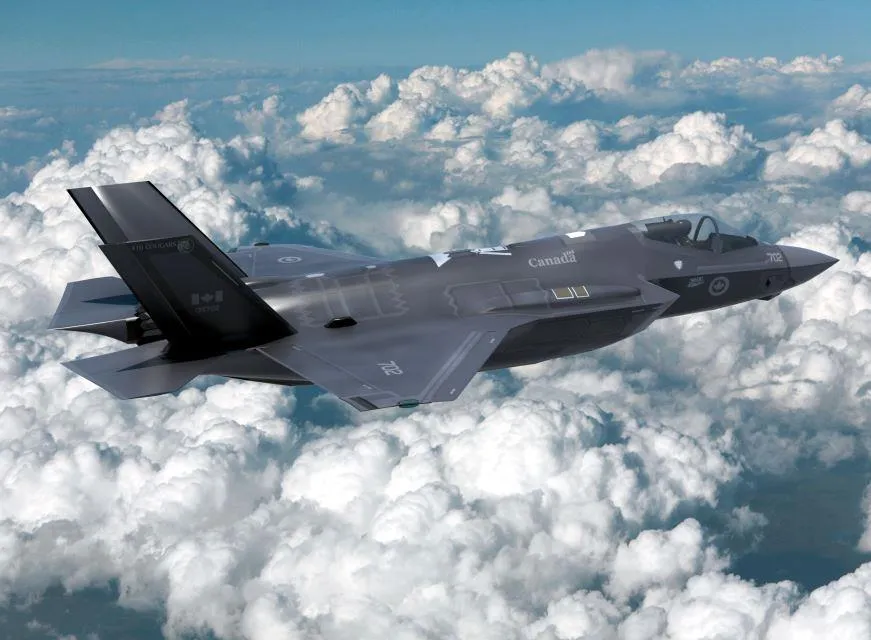
F-35A Lightning II

The Royal Canadian Air Force (RCAF)

Ottawa’s fighter recapitalization remains the centrepiece. Under the Future Fighter Capability Project, Canada is procuring 88 F-35A aircraft with associated weapons, infrastructure, training, and sustainment. The package is positioned as the most significant RCAF investment in more than three decades and will restore a modern, interoperable fighter fleet. Though the prime minister has ordered a review of the program, I believe this to be something Mr. Carney can use as a bargaining chip, rather than cancelling the project. A cancellation would cause more harm to Canada-US relations, and further degrade our ability to safeguard Canada’s airspace. Many have begun advocating for the Saab Grippen E/F, which is a capable aircraft to be sure. But starting over on fighter procurement, again, would delay the acquisition of new fighters. And let’s not forget that the F-35A is the most technologically advanced, and capable fighter in the world. For these reasons, I believe that Canada will end up honoring its contract to purpose the full 88 fighters.

Maritime patrol and anti-submarine warfare are being renewed through the Canadian Multi-Mission Aircraft project. The government has finalized a government-to-government agreement to acquire up to 16 Boeing P-8A Poseidon aircraft. The scope covers spares, training devices, support equipment, mission support centres, weapons, infrastructure, and initial in-service support.

Strategic air-to-air refuelling and transport are being replaced under the Strategic Tanker Transport Capability project. Canada is acquiring nine CC-330 “Husky” aircraft, a mix of new-build and used A330-200 airframes converted to the MRTT standard. The fleet will assume refuelling, strategic lift, aeromedical evacuation, and VIP transport duties as the CC-150 Polaris retires.

Remotely piloted air power is entering service at scale. The government has launched a multibillion-dollar acquisition of an RPAS capability from General Atomics, including 11 MQ-9B SkyGuardian aircraft and six ground control stations. Production updates show the first Canadian airframes moving through the line.

Search and rescue aviation is being modernized on two fronts. The CH-149 Cormorant Mid-Life Upgrade extends the service life of Canada’s AW101 SAR fleet with new avionics and mission systems, paired with an augmentation that draws on VH-71 airframes and components. In parallel, the CC-295 Kingfisher fixed-wing SAR fleet continues to enter service, bringing a modern sensor suite to nationwide SAR operations.

Tactical rotary-wing support is being sustained through the Griffon Limited Life Extension. The project upgrades 85 CH-146 Griffon helicopters with avionics, engines, displays, and mission equipment to keep the fleet viable to at least 2031 while preserving domestic industrial work.

Aircrew training is being overhauled under a consolidated, long-term service contract. The government awarded SkyAlyne a 25-year, multi-billion-dollar Future Aircrew Training program that will provide aircraft, simulators, classrooms, instructors, and in-service support, replacing multiple legacy arrangements and scaling output for pilots and mission specialists across RCAF fleets.

The air domain awareness backbone that underpins continental defence is also being renewed through NORAD modernization. Canada has outlined a 20-year plan valued in the tens of billions to field new long-range surveillance, command-and-control, and weapons system upgrades. A cornerstone is the Over-the-Horizon Radar portfolio, with the first Arctic OTHR transmit and receive sites announced, complemented by a Polar OTHR that extends coverage into the High Arctic. Together with modernized command systems and interceptor upgrades, these projects strengthen detection, tracking, and deterrence against evolving aerospace threats.
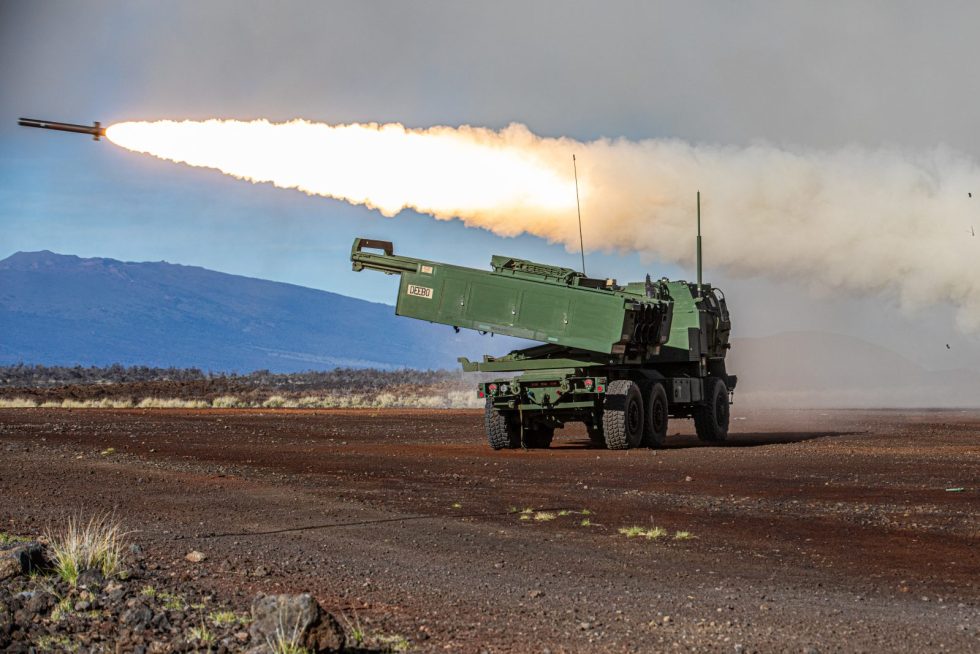
HIMARS System

Canadian Army

The Army is renewing its basic soldier system and personal equipment through several overlapping initiatives intended to improve survivability, situational awareness, mobility, and sustainment. The Integrated Soldier System Project will field wearable communications suites, position and navigation aids, power solutions, and associated accessories to thousands of dismounted soldiers, improving voice and data connectivity from the individual up to company level. Parallel clothing and personal kit modernization programs have refreshed cold weather and expeditionary collections, introduced next-generation ballistic helmets and load carriage systems, upgraded protective CBRN gear and flotation devices, and delivered a range of new patrol packs, sleeping systems and individual mission accessories. The Canadian Modular Assault Rifle program has been defined to replace the legacy C7/C8 family and rationalize the rifle fleet; planning calls for a modern modular rifle family sized to meet peacetime, reserve and surge requirements across the force. Short term procurements in recent years additionally brought in replacement pistols, improved squad weapons and sniper systems, and incremental optics and fire control upgrades across weapon families.

Mobility and logistics modernization is anchored by the Logistics Vehicle Modernization program, which will deliver a new fleet of thousands of light and heavy trucks, trailers, containers and mission modules to standardize national transport, resupply and recovery capability. The LVM acquisition includes more than a thousand light tactical trucks and several hundred heavy logistics platforms with options for armoured protection kits, modular payloads and integrated sustainment. Complementing LVM, the Armoured Combat Support Vehicle program is replacing legacy tracked and older wheeled platforms with a fleet of LAV-based ACSVs to provide ambulance, recovery, engineering, mobile repair and command post variants. These platforms will align vehicle fleets, simplify training and maintenance, and extend protected mobility across domestic and expeditionary tasks. Tactical Armoured Patrol Vehicles remain in service as the Army’s patrol and reconnaissance wheeled fleet, while existing light utility and G-Wagon fleets continue to be refreshed for liaison and light mobility roles.

Armour and tracked capability is being preserved and sustained through a combination of upgrades and long-term in-service support. Canada’s Leopard 2 tank fleet has been subject to an extended maintenance and sustainment contract to ensure readiness, while engineering and recovery variants based on tracked chassis are being modernized to preserve manoeuvre and force protection on high-intensity battlefields. The LAV family remains central to mechanized formations; ongoing work refines and expands LAV 6 and related variants to carry mortar, command and combat functions, and the Armoured Combat Support Vehicle deliveries are already replacing older Bison and M113 variants in many units.

Indirect fires and artillery have been repositioned as a high priority. The Indirect Fires Modernization program moves the Army away from a predominantly towed artillery posture toward a mobile, self-propelled architecture. Procurement planning and industry engagements envision the acquisition of a battery-level, modern 155mm self-propelled howitzer capability in substantial numbers to replace the existing M777 towed guns, together with integrated mortar systems sized for both heavy and light tactical vehicles. This change will increase mobility, responsiveness and protection for fire units and is expected to include new ammunition stocks, fire control systems and training packages.

Canada has formally committed to acquiring a land-based long-range precision strike capability. The project appears in official defence planning as the Long Range Precision Strike (Land) project and the government’s 2024 defence vision allocates funding for long-range land missiles, with a program envelope announced at about CAD 2.7 billion over 20 years to acquire long-range missile capabilities that can give Canadian forces reach beyond that of potential adversaries.

Work to deliver that capability has progressed along two complementary tracks. First, Defence officials have indicated the project will seek a layered, treaty-compliant, precision strike effect at operational ranges, which points toward launchers such as the M142 HIMARS family and associated munitions like GMLRS and extended-range variants, and toward multi-hundred-kilometre missiles being considered in allied procurement conversations.

In October 2025 a U.S. congressional notification cleared a proposed Foreign Military Sale for Canada covering M142 HIMARS launchers and a package of rockets and missiles, indicating Canada is moving to acquire launchers and munitions capable of delivering long-range precision fires. That notification is consistent with the Long Range Precision Strike (Land) project and signals operational choices the government is actively considering.

The combination of new 155mm self-propelled howitzers, mortars, and long range strike capability will give the Canadian Army a devastating level of firepower it can bring to bear against adversary forces.

Air defence is undergoing multi-layered renewal. Urgent operational purchases in recent years provided short-range missiles and counter-UAS kits to protect deployed units, while the Ground Based Air Defence program is in a formal project definition phase to deliver an integrated tactical GBAD capability able to counter rockets, artillery, mortars, cruise missiles and unmanned threats. The Army’s short-range surface-to-air purchases include modern man-portable and vehicle-mounted systems for expeditionary duty, and procurement planning contemplates layered sensors, shooters and command elements to be deployed both domestically and on NATO commitments.

Sensors, reconnaissance and command support are being modernized across a suite of programs. The Land Intelligence, Surveillance and Reconnaissance Modernization project will standardize battlefield sensors, improve data dissemination and introduce new electro-optical, radar and electronic support systems to expand organic sensing at brigade and battalion levels. The Land Command Support System and associated tactical communications programs will replace and upgrade the Army’s brigade-to-soldier command and control networks, fielding modern radios, secure data networks, ruggedized command nodes and the software tools required to fuse and disseminate real-time battlefield information.

Force protection, counter-IED and support engineering equipment are receiving attention through fielded procurements and upgrades. Modern mine clearing, route clearance, and engineer mobility equipment are being acquired or refreshed to support both domestic disaster response and high-intensity expeditionary operations. Recovery, workshop and forward repair capabilities are being embedded in vehicle and unit modernization programs to improve operational endurance.

Training and sustainment frameworks are being reformed to match new equipment. Investments include large in-service support contracts, expanded domestic maintenance arrangements for major platforms, and industry partnerships intended to sustain fleets over their lifecycle. The Army is also pursuing virtual and live training systems to speed platform transition, support doctrine development and improve combined arms integration with newly procured systems.

A range of niche and enabling items round out the procurement picture. These include multi-purpose engineering systems, bridging and watercraft for littoral operations, upgraded mortar systems integrated onto wheeled platforms, battlefield electronic warfare and signals intelligence suites for brigade combat teams, enhanced medical evacuation and aeromedical packages, and expanded cold-weather mobility kits tailored to Arctic operations.

Taken together, these announced programs represent a comprehensive refresh of the Army’s materiel baseline. The combined effect is intended to deliver a more mobile, survivable and sensor-rich land force capable of operating from high-intensity continental defence to NATO expeditionary commitments and Arctic sovereignty tasks. Many projects are already moving from concept and options analysis into requests for information and contracting phases; others remain in definition and will be refined as capability requirements, industrial options and budgets are finalized. 

Conclusion

For the first time in decades, Canada appears to be taking its own defence seriously. This budget marks a turning point, not only in rhetoric but in substance. The government is matching its promises with real investment, addressing decades of neglect across every branch of the Canadian Armed Forces. Procurement reform, large-scale re-equipment, and sustained funding for personnel and veterans all signal a genuine recognition that national security requires more than diplomacy and goodwill—it requires capability. The establishment of the Defence Investment Agency, combined with sweeping modernization programs across the Navy, Air Force, and Army, demonstrates that Ottawa is finally building the foundations of credible hard power. Canada’s allies will take notice, and so too will those who would test its resolve. For the first time in a generation, the future looks promising. Canada is beginning to stand up for itself again—strong in principle, and now, increasingly, strong in power.

That said, we have seen big promises before, only for them to be rolled back or deferred in later budgets. While that remains a risk here, something tells me that increasing defence spending is one area Prime Minister Carney is genuinely committed to. For that reason, I remain hopeful that this time will be different—that Canada will finally follow through.

And for those considering a life of service, there has never been a better moment to join the Canadian Armed Forces. The country is rebuilding its strength, and those who step forward now will be part of shaping its future.

Which Submarine Should Canada Buy?

Canada has narrowed its next-generation submarine competition to two boats that represent different philosophies of conventional undersea warfare. The German–Norwegian Type 212CD by ThyssenKrupp Marine Systems (TKMS) is a compact, exceptionally quiet design optimized for prolonged covert presence in northern approaches and other complex littorals. South Korea’s KSS-III Batch II by Hanwha Ocean is a larger, blue-water hull with a built-in vertical launch system and the energy budget to carry more weapons and operate farther from home. Both appear to be capable platforms.


Requirements


The first step is to assess what the Government of Canada wants out of its new submarine fleet and what capabilities it will need to achieve its objectives. I’m starting here because there is a common misconception that Canada needs submarines exclusively for Arctic patrol and surveillance, which is false. While it’s true that Arctic sovereignty and security are quite rightfully a preoccupation for the government, patrolling Canada’s Arctic is not the only capability Canada needs out of its new fleet. However, it is the most common argument in favour of a submarine fleet since Arctic sovereignty remains popular within Liberal and Conservative circles alike, along with mainstream media.

Unfortunately, this narrative forces a lopsided conversation about the role these new boats will be expected to play over the coming decades. In addition to Arctic operations, these subs will be expected to deploy far into the North Atlantic with NATO and push across the Pacific to support the Indo-Pacific Strategy. Ottawa’s own defence policy update ties submarine recapitalization to contributions with allies in both theatres.

This implies a blue-water capability, which means these conventionally powered submarines must be able to deploy and fight in the open ocean, far from home ports and daily logistics, for extended periods. This requires long range and endurance for transoceanic transits, sustained submerged persistence through air independent propulsion (AIP) and high-capacity batteries to minimize snorkelling, and habitability and maintenance margins that keep the crew and systems effective past the 30- to 60-day mark. Simply put, the new boats must be able to cross an ocean, remain covert and lethal on station, and deliver effects.

The government further stipulated specific capabilities that the new submarines must have in one of its press releases stating “Through the Canadian Patrol Submarine Project (CPSP), Canada will acquire a larger, modernized submarine fleet to enable the Royal Canadian Navy to covertly detect and deter maritime threats, control our maritime approaches, project power and striking capability further from our shores, and project a persistent deterrent on all three coasts.”

What caught my attention here is the ability to project power and striking capability further from our shores. Power projection is synonymous with a blue-water capability; however, a striking capability, which I take to mean a land strike capability, is not typical for a conventionally powered SSK, which are typically armed only with torpedoes to take out other submarines or surface vessels.

To sum up, Canada’s new subs must be able to:

  • Patrol the Arctic with under-ice capability year-round
  • Deploy with NATO in the North Atlantic and support Canada’s commitment to the Indo-Pacific Strategy – A blue-water capability
  • Remain submerged for three weeks or more at a time
  • Covertly detect and deter maritime threats
  • Control Canada’s maritime approaches
  • A range of 7000 + nautical miles
  • Project power far from home ports
  • Anti-surface and subsurface warfare
  • Land-attack capability via cruise and/or non-nuclear ballistic missiles
  • Insert Tier-1 special operators on coastal infiltration missions
  • Conduct intelligence, surveillance, and reconnaissance in Canadian maritime approaches and abroad.

With that out of the way, let’s look at what each submarine can do.


German-Norwegian Type 212CD


The 212CD is the follow-on to Germany’s successful 212A, enlarged for greater payload and endurance and co-developed with Norway under a binational program. The program’s Critical Design Review was completed in August 2024, marking the formal end of detailed design and a gateway to full-rate production. In December 2024, the German government expanded its order by four boats, bringing Germany’s total to six, while Norway plans to acquire two more, bringing its total to six, which reduces the risk of Canada getting stuck with another orphan sub. This is a significant advantage because, as we’ve learned, maintaining an orphan fleet like Canada’s current Victoria class is exceedingly complex and expensive due to a lack of spare parts and allied participants for collaboration on future upgrades.

On the sensor and combat-systems side, the 212CD moves fully into the digital periscope era. The optronic suite replaces a traditional hull-penetrating periscope with twin non-penetrating masts, HENSOLDT’s OMS-150 and OMS-300, paired with an i360 panoramic system. That combination allows very short exposure times at periscope depth and multispectral imaging, which helps in poor light and clutter, and it integrates directly with the new ORCCA combat system supplied by the KTA Naval Systems joint venture.

ORCCA is the European off-the-shelf brain for 212CD, built to fuse sonar, optronics, ESM, and navigation data and to exchange a common operating picture with allied units. The navigation and mine-avoidance package from Kongsberg, centred on the SA9510S Mk II and EM2040 MIL echo sounders, gives the boat precise bottom-mapping and hazard warning at slow speed. Those elements together explain why 212-series boats have a reputation for being comfortable in tight, shallow, sensor-dense waters that challenge larger hulls.

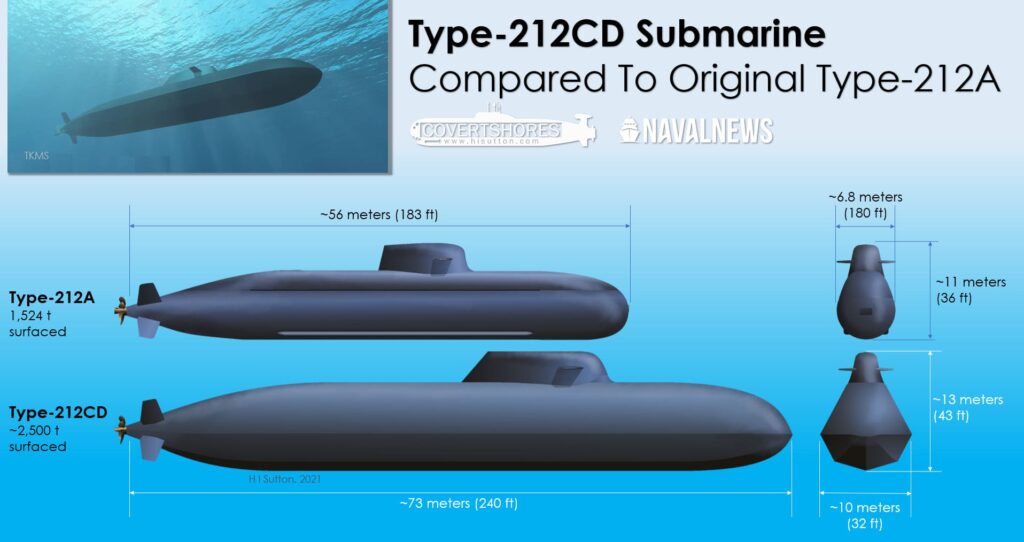
The propulsion architecture stays true to the 212 family. A PEM fuel-cell air-independent propulsion module supports long, quiet submerged loitering, extending the amount of time the sub can stay submerged without having to snorkel. Public sources do not publish exact submerged endurance figures for the 212CD, but the smaller 212A’s weeks-long AIP benchmarks and the 212CD’s greater internal volume support a reasonable inference that the new design could stay submerged for up to three weeks before having to recharge its batteries. Having said that, it’s important to note that the 212CD is purpose-built to lie in wait at a critical choke point, surprising an adversary with an ambush with little to no warning.

The armament choices reflect that mission focus. The 212CD retains 533 mm torpedo tubes for heavyweight weapons and mine employment. Germany has aligned the class with an updated heavyweight torpedo path and continues to sponsor the IDAS very short-range, tube-launched missile intended as a self-defence option against ASW helicopters and small craft. There is no organic vertical launch system in the design, so any land-attack or long-range anti-ship missile would require a torpedo tube-launched solution and associated integration. For Canada, that means the 212CD is a stealthy ambush submarine first and a strike platform only if Ottawa decides to fund non-trivial integration work.

Source: www.navalnews.com

One tangible edge of the 212CD worth mentioning is its diamond-shaped outer hull. By replacing the usual circular cross-section with flat, sloped sides, the design reflects incoming active-sonar energy away from the emitter, cutting target-echo strength and shrinking detection ranges, similar to how stealth aircraft avoid radar detection and increasingly relevant as ultra-quiet subs blunt passive detection. TKMS and independent reporting note this shaping is explicitly intended to defeat modern mono- and multistatic active sonars, complementing (not replacing) anechoic coatings and other stealth measures.

KSS-III Batch II


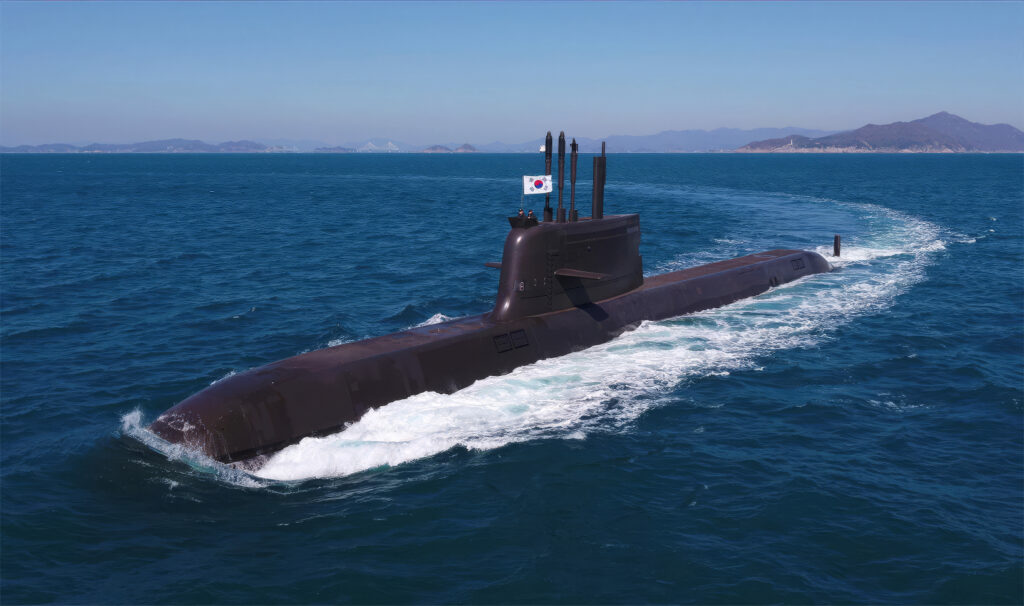
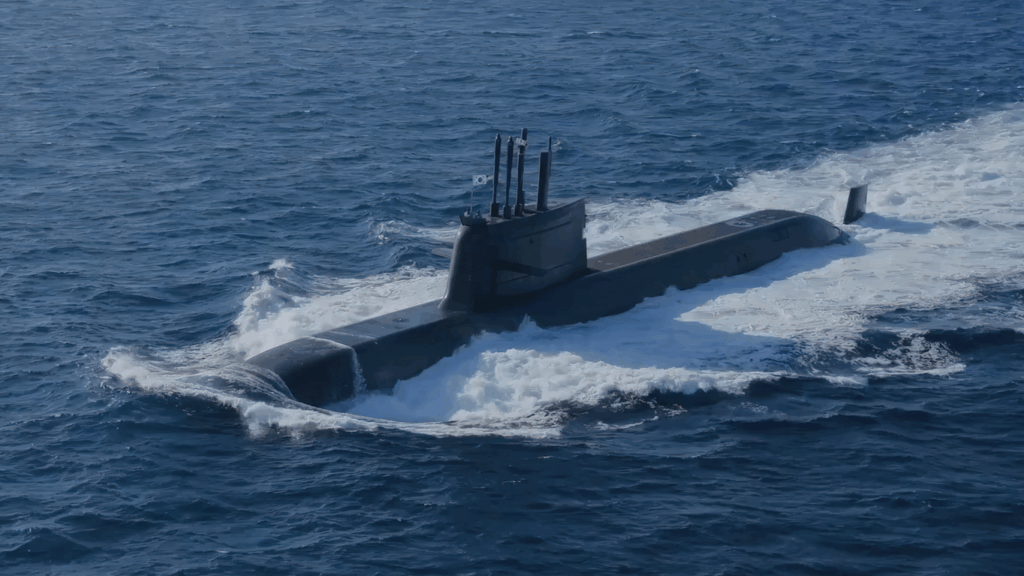
South Korea’s KSS-III Batch II


This boat comes from a very different design philosophy. Seoul wanted a domestically controlled, blue-water conventional submarine with a meaningful vertical launch battery. Batch I delivered the baseline. In September 2021 the Republic of Korea demonstrated a successful launch of the Hyunmoo-4-4 submarine-launched ballistic missile from the lead boat, which settled any debate about whether the VLS module and ejection sequence work. Batch II expands the architecture to ten VLS cells and incorporates lithium-ion batteries on top of AIP, enhancing submerged endurance and the ability to sustain higher power draws during sprints and evasions. Those are foundational choices if Canada wants a conventional submarine that can do more than lie in wait close to home.

The KSS-III uses a fully digital periscope suite built around non-hull-penetrating optronic masts from Safran, contracted by DSME for the class; Safran’s materials describe these masts as all-electronic sensor heads with multi-channel EO/IR, HDTV imaging, and laser ranging, which aligns with the move away from traditional optical periscopes. Electronic support and communications intelligence are provided by Indra’s Pegaso system, selected for the first Batch II hull and integrated into the submarine’s combat system. The combat management system itself is developed by Hanwha Systems, which serves as the integration backbone for onboard sensors and weapons, including Pegaso. The sonar fit is supplied by LIG Nex1, and Batch II introduces a conformal bow array with more than triple the aperture of the Batch I cylindrical array, along with longer flank arrays, which materially improves both passive sensitivity and active performance.

Size and volume are the other obvious differences. Batch II’s length and displacement figures published by Jane’s and Naval News put the variant at roughly 89 meters and about 3,600 tonnes surfaced, five and a half meters longer than Batch I. The extra volume buys magazine depth, more space for future sensors and unmanned vehicles, and better endurance on station. It also permits a crew and habitability model designed for long patrols. The trade-off is that a larger hull is a little less forgiving in very tight leads or extremely shallow sills.

The weapons architecture is where KSS-III parts company with most Western SSKs. Six 533 mm tubes cover torpedoes, tube-launched anti-ship missiles, and mobile mines, which mirrors European practice. The vertical launch module gives commanders a different playbook. South Korea has proven the cell, and although the ROKN’s SLBM is a national program, the presence of an integrated VLS opens a credible pathway to a conventional land-attack capability via cruise or non-nuclear ballistic missiles. The KSS-III is the first non-nuclear hull in reach that can bring to bear a robust anti-sub, anti-ship, and land attack capability without significant redesign.

For Canadian crews, the KSS-III Batch II’s habitability is a real operational advantage for mixed male and female crews. The larger hull allows for a two-deck layout with separate or configurable berthing, increased privacy, and additional washrooms and showers, which reduces fatigue on long patrols. High automation keeps the core crew around the low-30s, so there is more space per sailor and less friction day to day. Paired with lithium-ion batteries that lengthen quiet endurance between snorts, these features help crews stay rested and effective on longer patrols across three oceans.

The KSS-III Batch II is already in production, with steel already cut and a publicly shown fit that includes a 10-cell VLS and lithium-ion batteries. If Canada signs in 2026, Hanwha says the first boat would arrive around 2032, with four delivered before 2035. The program is domestic today, nine boats for the ROK Navy across three batches, so a Canadian buy would set up the first export sustainment system. That risk is manageable by contract: full technical data and IP access, Canadian-based training pipelines, and a clear division of work between Korean yards and Canadian depots. The remaining concern is fleet commonality, since only two navies would operate the class, but the upside is influence: as the first export customer with up to twelve boats, Canada would hold a strong hand on configuration control and growth options.


What the Two Designs Mean for Canadian Operations


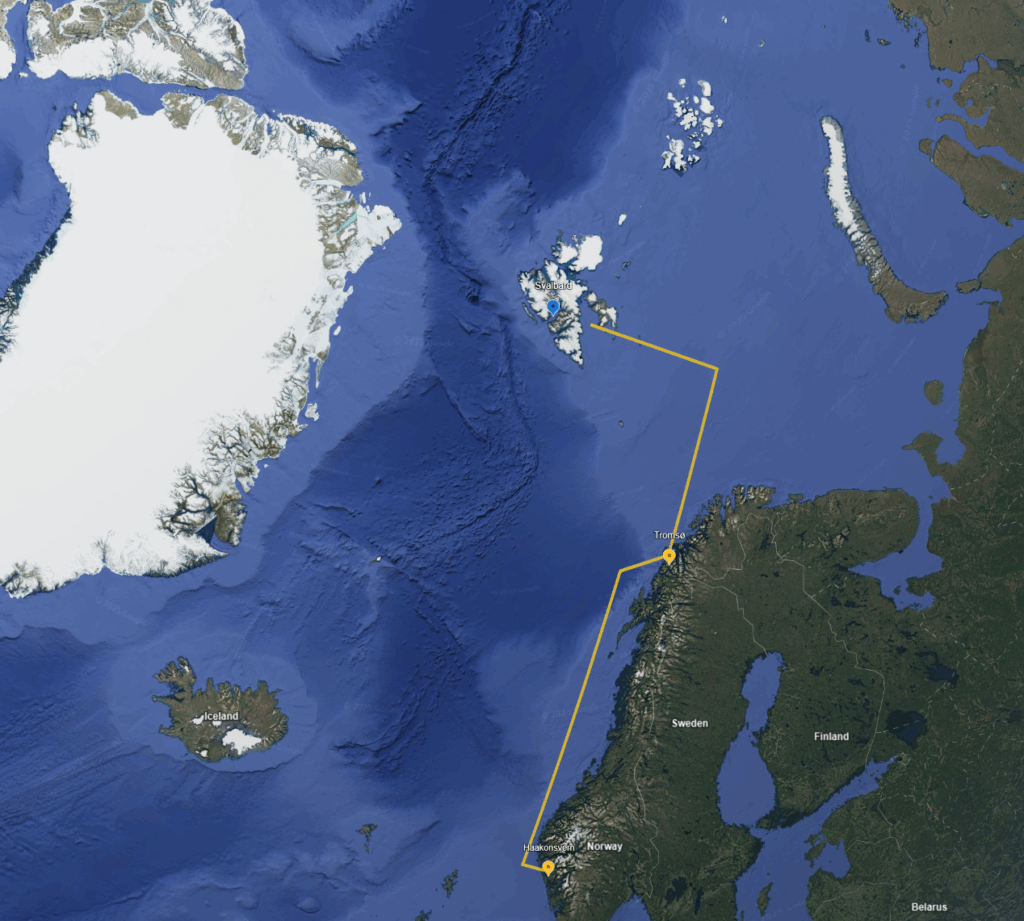
Norway’s and Canada’s “Arctic” are not the same operating problem. Norwegian submarines sail from Haakonsvern near Bergen to the Norwegian and Barents Seas and can be on station quickly. The great-circle distance from Bergen to Tromsø is about 660 nautical miles, and from Tromsø to Longyearbyen on Svalbard, which is Norwegian territory, is roughly 520 nautical miles. Along that coast, warm Atlantic inflow keeps waters largely ice-free year-round, and the Barents Sea has seen pronounced winter ice decline, which shapes patrol patterns around fjords, shelf edges, and chokepoints rather than prolonged under-ice work.

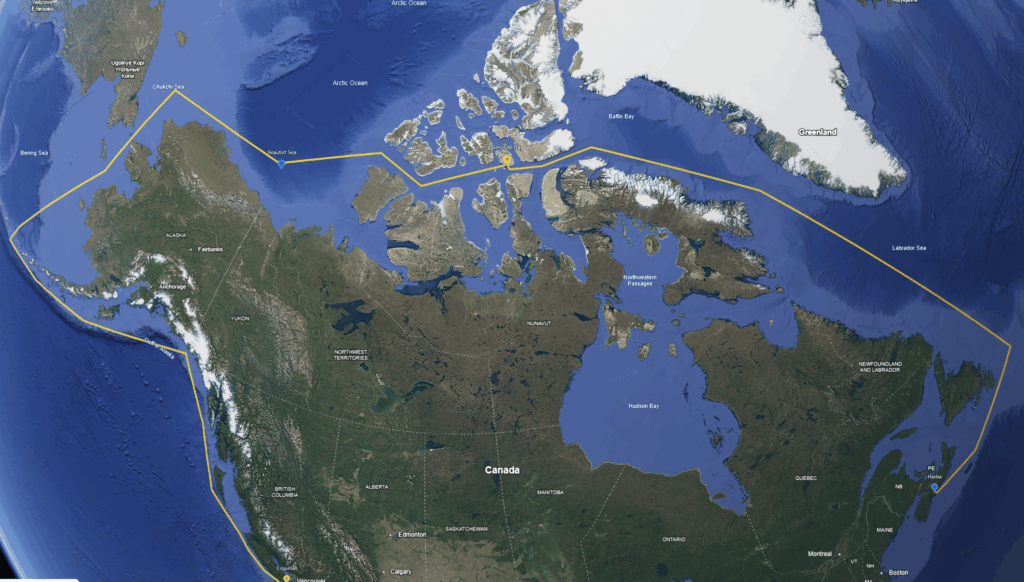
By contrast, Canadian boats leave Halifax or Esquimalt for patrol boxes that are much farther away. Halifax to Iqaluit is about 1,150 nautical miles and Halifax to Resolute Bay nearly 1,980 nautical miles, while an Esquimalt to Beaufort Sea leg to Tuktoyaktuk by sea route is on the order of 3,670 nautical miles. Large parts of the Canadian Arctic Archipelago still retain multi-year ice through summer, which drives different range, endurance, and ice-edge considerations than those built into the German–Norwegian program.

Viewed from Halifax and Esquimalt, the Type 212CD offers a force that makes Canada’s maritime approaches hard for any opponent. The design’s faceted “diamond” outer hull reduces target echo strength under active sonar, complementing very low acoustic signatures and fuel-cell AIP that supports long, quiet waits along shelf breaks and in straits. Its fully digital visuals suite, with twin HENSOLDT optronic masts and the i360 panoramic system, minimizes time and exposure at periscope depth, while the Kongsberg SA9510S Mk II mine-avoidance and bottom-navigation package lowers risk in cluttered, shallow water. These attributes align with a hunter-killer posture in choke points such as the Grand Banks, Cabot Strait, Hecate Strait, and Dixon Entrance, and the KTA “ORCCA” combat system stack is already standardizing across Germany and Norway, which eases NATO integration for Canada.

The drawback emerges when a mission needs organic strike at range. The 212CD is a torpedo-centric SSK, with future tube-launched options possible, but it is not drawn around a vertical launch battery and cannot add one without becoming a different boat. If a patrol box is far from Canada and the task includes land attack or complex multi-axis salvo tactics, that design choice limits options.

The KSS-III flips that calculus for blue-water work. Batch II adds a ten-cell vertical launch module and lithium-ion batteries, which together expand weapon capacity, allow land-attack or anti-ship strikes from covert deep submergence, and improve submerged endurance and sortie pacing. The class is larger than 212CD, with more internal volume and high automation. Hanwha and recent trade press cite a nominal crew in the low 30s, which, combined with the larger hull, improves habitability on 30–60 day trips to distant stations in the Pacific and North Atlantic. These traits are useful when Canada needs a conventional submarine that can hold more weapons, stay longer on station, and influence events at sea and ashore.

Sustainment and schedule are the balancing factors. The 212CD brings an existing European user group and a NATO-standardized combat-system supply chain, which lowers integration friction. KSS-III would require Canada to stand up a bilateral sustainment framework with South Korea, with full data rights and in-country training written into contract from day one, but it buys influence over the export configuration. On schedule, Hanwha publicly states that, if under contract in 2026, it can deliver Canada’s first KSS-III around 2032 and four boats before 2035. This has the added benefit of allowing Canada to dispose of the Victoria class submarines earlier, which could save the Department of National Defence roughly $1 billion.

In short, the German boat brings exceptional stealth shaping, a mature NATO sensor and combat-system ecosystem, and superb choke-point lethality. The Korean boat brings greater weapons volume through VLS, lithium-ion energy for blue-water persistence, more space and automation for crews on long legs, and a vendor-proposed delivery pace that could compress Canada’s transition off Victoria-class.


Recommendation

The KSS-III is the only conventional submarine that can meet all of Canada’s requirements. It combines the blue-water reach and endurance demanded by transoceanic tasking with a vertical launch system that enables credible land-attack and complex anti-surface strike options, supported by lithium-ion batteries that lengthen quiet submerged persistence and improve sortie tempo on distant stations. Its larger hull and higher automation provide the habitability and crew margin needed for 30 to 60 day deployments from Halifax and Esquimalt to the North Atlantic, the Indo-Pacific, and the Arctic ice edge, while remaining within the conventional, non-nuclear profile Canada has set. The design’s modern combat system and sensor suite can be integrated with Canadian and allied command, control, and targeting architectures, and the bilateral sustainment framework required with South Korea can be structured by contract to include full technical data access, in-country training pipelines, and an industrial workshare that anchors through-life support domestically. The delivery cadence proposed for a 2026 award would shorten Canada’s reliance on the Victoria class and reduce associated sustainment exposure during transition, while an initial Canadian order of up to twelve boats would give Ottawa a controlling voice over configuration management, growth paths, and export-variant standards for the life of the class.

Join my newsletter for more analysis on geopolitical, defence, and national security issues and receive a free chapter of my upcoming Canadian military thriller, The Quiet War: Canadian Front.

No More Excuses: How Canada Can Reach NATO’s 2% and Keep Going

Canada Can and Must Meet NATO’s Defence Spending Commitments—Here’s how


Much attention has been given to Prime Minister Mark Carney’s recent promise to finally meet Canada’s NATO commitment to spend 2% of its GDP on national defence—a target Canada has conspicuously failed to reach since first pledging to do so in 2014. There’s even discussion of increasing this commitment to 5% at an upcoming NATO summit. Historically, Canadian governments—both Liberal and Conservative—have carefully avoided explicitly refusing compliance, instead deflecting attention by emphasizing Canada’s unique contributions to NATO missions and global security efforts.

Indeed, Canada has participated meaningfully in NATO operations over the decades, from missions in the Balkans to recent support efforts in Latvia. Yet, despite these contributions, with the exception of special operations forces, Canada’s military capabilities have eroded significantly, limiting its ability to respond robustly to modern threats.

Various justifications have been provided by governments and analysts for Canada’s reluctance to meet the 2% spending benchmark. Fiscal constraints are frequently cited, with policymakers suggesting defense increases would necessitate politically challenging tax hikes or program cuts. A lack of political will, tied to low voter interest in defense spending, has further allowed successive governments to sidestep meaningful investment. Analysts have also argued that Canada’s geographic proximity and defense alliance with the United States have fostered complacency, reducing urgency for self-reliance. Critics of the 2% figure itself suggest it’s arbitrary and not reflective of actual defense capability, advocating instead for “outcome-based” assessments. Procurement inefficiencies and outdated infrastructure compound these arguments, with the government often indicating increased spending would be ineffective without comprehensive procurement reforms. Additionally, some claim Canada’s defense industry lacks the capacity to absorb rapid funding increases without heavy reliance on imports.

In sum, there is no shortage of excuses, but that’s all they are. Excuses.

It’s a Matter of Choice, Not Cost


Countries much smaller than Canada in both population and GDP like Estonia, Latvia, Lithuania, Slovakia, and Albania have all managed to meet or exceed the 2% target. The largest among them is Slovakia with a population of 5.4 million, nominal GDP of $141 billion USD, and a GDP per capita of $25,000 USD. Compare that to Canada, with a population of nearly 41 million, nominal GDP of 2.24 trillion USD, and a GDP per capita of approximately $55,000 USD.

These figures highlight the significant difference in economic scale between the two countries. Despite its smaller economy, Slovakia has managed to meet or exceed the NATO defense spending target of 2% of GDP.

This comparison demonstrates that achieving the NATO benchmark has little to do with the size of a nation’s economy or the cost of such initiatives. Rather, policy decisions and priorities are the culprit.

When politicians and pundits say that Canada can’t afford to meet its NATO commitments, what they are really saying is, we simply don’t want to. Politics and public policy discussions have become chambers of talking points, deflections, and just about anything except for truth and accountability.

To Justin Trudeau’s credit, he was frank with our allies, albeit behind closed doors when he said that Canada had no intention of meeting the 2% spending commitment a little over a year ago. Unfortunately for Trudeau and for Canada, such blatant disregard for Canada’s commitments generated significant animosity among our allies.

Could anyone imagine Trudeau making such a declaration about its Paris climate targets? Surely not. Which brings us back to the one simple point. Increasing defence spending is not a matter of capability. It’s a matter of choice.

Here are some concreate steps Canada can take to increase defence spending quickly, and effectively.


A logical first step would be significantly increasing the salaries of our troops, a measure desperately needed given the rising cost of living. Additionally, Canada’s military recruitment bureaucracy requires immediate and comprehensive reform. During the Afghanistan conflict, some Canadian citizens eager to join the Canadian Armed Forces faced excessive delays—sometimes up to two years. Frustrated, these individuals turned instead to the UK’s Royal Marine Commandos, where their applications were processed and accepted within mere months, placing them quickly into active training overseas. This discrepancy is not due to the UK being less rigorous; rather, it highlights Canada’s overly bureaucratic and inefficient recruiting processes.

Canada should also more readily consider off-the-shelf equipment purchases, a practical approach employed by former Prime Minister Harper with acquisitions like the CC-130J Hercules and C-17 Globemaster aircraft. While long-term investments in Canada’s defense industry remain essential for self-reliance, urgent equipment procurement must prioritize operational effectiveness and troop welfare over domestic job creation. Although supporting local industries is important, it should not lead to decades-long delays and significantly inflated costs for essential military hardware. Canada’s defense procurement strategy must therefore strike a pragmatic balance, ensuring timely and cost-effective outcomes that directly enhance our military capabilities.

What about Canada’s planned purchase of the F-35 Lightening II?


Canada must quickly complete its acquisition of the full complement of 88 F-35 fighters. I understand and support Canada’s growing desire to move away from reliance on the United States for procurement, however, the F-35 is a Joint Fighter program, of which Canada is already an integral member. The contract will provide significant economic advantages, but more importantly, our horrifically slow procurement process means our pilots could be waiting decades instead of  years for new jets. Furthermore, modern air defence threats necessitate fight-generation stealth capabilities to protect our pilots. Why send our pilots into harms way in jets that can be detected by radar, and fired upon, when we can supply them with fighters that are much more difficult to detect? Can we please start thinking about the troops? If we want to continue participating in NATO air missions, and we absolutely should, if we want to continue being a reliable ally, then it behooves us to equip our pilots with the very best, and that means the F-35.

To the naysayers that argue the United States has a kill switch, I say hogwash. If the UK, Australia, and several other NATO allies aren’t deterred by this, then neither should we be. Further, I reject the notion that we would ever have to militarily defend ourselves against the United States. Get real folks. That’s just not going to happen.

But what about the Saab Gripen?


We should buy them too!

Incorporating the Saab JAS 39 Gripen E into the Royal Canadian Air Force would enhance Canada’s capability to fight in the air. We are a large country with a large air space. We need a large air force. The Gripen offers a cost-effective, highly capable, and strategically versatile complement to the F-35, enhancing the RCAF’s operational flexibility.

The Gripen is equipped with the MBDA Meteor missile, a beyond-visual-range air-to-air missile (BVRAAM) with an operational range exceeding 100 kilometers and a no-escape zone over 60 kilometers. This capability enables the Gripen to engage and neutralize threats, such as Russian bombers, from significant distances, enhancing the RCAF’s defensive posture.

Designed for operations in austere environments, the Gripen E can operate from short, unprepared runways and withstand harsh Arctic conditions. This makes it particularly suitable for defending Canada’s vast northern territories, where infrastructure is limited, and rapid response is critical.

Concerns about maintaining multiple fighter platforms are often overstated. Several NATO allies, including the United Kingdom (operating both F-35s and Typhoons), Germany (Typhoons and Tornados), and Norway (F-35s and F-16s), successfully manage mixed fleets. Canada’s robust aerospace sector is well-equipped to handle the logistics and maintenance associated with a diversified fighter fleet.

Integrating the Gripen alongside the F-35 would provide the RCAF with a balanced mix of stealth and versatility, ensuring readiness across a spectrum of missions. This strategic diversification would enhance Canada’s defense capabilities and reaffirm its commitment to NATO obligations.

These are just a few, relatively quick fixes, off the top of my head that can be implemented which would significantly increase the CAF’s capability which would certainly get us to 2% and even beyond.

Over the Long Term


Longer term initiatives like the River class destroyer, and acquisition of 12 submarines will ensure that our defence spending maintains pace with our NATO commitments while significantly enhancing the CAF’s ability to defend itself and its allies.

If Canada re-aligns its priorities, it absolutely can achieve its NATO defence spending commitments. The UK, France, and Germany all spend 2% or more of their GDP on defence, and the last time I checked, all three countries had robust social programs that rival Canada’s.

Recent concerns over Canadian sovereignty demand we act now. We want to be a truly sovereign nation; we must provide a credible military defence capability. Our future, and indeed that of the rest of the word depends on it.

Introducing The Quiet War by Michael J. Lalonde

The Quiet War by Michael J. Lalonde book cover

A new kind of military thriller has arrived—and it’s unapologetically Canadian.

I’m Michael J. Lalonde, a former intelligence officer in the Canadian Armed Forces and former politician, now author of The Quiet War: Canadian Front. Drawing from two decades of experience in intelligence, strategy, and leadership, this debut novel is a deeply authentic, high-stakes story of covert warfare, political tension, and national survival.

Ever wonder what Canada’s special operations and intelligence community can really do when push comes to shove?

The story draws on real-world experience to deliver more than a typical thriller. The Quiet War: Canadian Front doesn’t just entertain—it challenges assumptions. The novel imagines a scenario where Canada is finally forced to act with strength, precision, and resolve, despite years of political drift and underinvestment in national defence. It’s a story grounded in the realities of our capabilities—quiet, disciplined, and deadly when called upon.

The Quiet War by Michael J. Lalonde is grounded in real-world intelligence, special operations, and high-stakes realism.”

— Richard Tanner

I know what our people are capable of. This story is built on that truth. As the plot unfolds, readers will see just how potent Canada’s elite operators and intelligence professionals can be when our national security is at stake—and how far they’re willing to go to protect our values, even when the country’s political leadership falters.

With The Quiet War: Canadian Front—the first book in a bold new series—I set out to give Canada the centre stage it deserves in this genre.

The novel imagines a deadly international conflict unfolding in Canada’s own backyard. Combining real-world tactics with relentless pacing and complex characters, this book is for readers who crave the authenticity of Tom Clancy, the grit of Mark Greaney, and a voice that finally puts Canada at the centre of the story.

As the world of The Quiet War expands, future installments will continue to spotlight Canada’s role on the global stage while deepening alliances with traditional partners like the United Kingdom. As the threat intensifies, the story will explore how these nations respond—not just through diplomacy, but through joint military and intelligence operations. Expect to see new characters emerge, strategic tensions rise, and national leaders pushed to their limits. The series will grow in scale and complexity, but its foundation will remain grounded in courage, loyalty, and national resolve.

Want to explore more? Start here for author FAQs or click here to dive into a full description of The Quiet War: Canadian Front.

To stay up to date on my writing, receive geopolitical insights, and gain access to exclusive short stories, subscribe to my newsletter.

Join the mission early. Get the first chapter free—and step into a world of special operations, military intelligence, political intrigue, and global stakes unlike anything you’ve seen in Canadian fiction.

Book Review: Play Dumb by Cole Chase

Play Dumb by Cole Chase

Play Dumb by Cole Chase is the second installment of his latest series, The Valiant Thrillogy. It is a gripping and high-octane sequel that delivers relentless action, razor-sharp dialogue, and a masterfully woven web of cyber warfare, political intrigue, and personal stakes. Cole Chase crafts a thriller that balances pulse-pounding tension with intelligent storytelling, keeping the reader hooked from the very first page.

The novel’s pacing is impeccable, seamlessly blending high-stakes heists, digital warfare, and close-quarters combat. Every chapter is infused with a sense of urgency, making it impossible to put down. The action is visceral and immersive, showcasing meticulous attention to tactical realism while never losing sight of the emotional weight behind every move.

The characters are equally compelling, each bringing their own strengths, flaws, and motivations to the table. Quinn Richards stands out as a leader forced to navigate increasingly dangerous waters, his sharp wit and strategic mind constantly tested by powerful adversaries. The supporting cast shines, with dynamic personalities that add depth to the story, making every victory hard-earned and every setback deeply felt.

Beyond the action, Play Dumb excels in its exploration of power, deception, and the evolving nature of modern conflict. It delves into the intersections of technology, politics, and personal ambition, creating a thriller that feels as timely as it is exhilarating. The cyber-warfare elements are particularly well-executed, demonstrating a clear understanding of how digital battles are fought in today’s world.

Cole Chase has crafted a sequel that not only meets the high bar set by its predecessor but raises it even further. Smart, intense, and deeply satisfying, Play Dumb is a must-read for fans of high-tech espionage, strategic thrillers, and action-packed storytelling.

Book Review: Cold Hit by Cole Chase

Cole Chase

Cole Chase’s Cold Hit is the first installment of his latest series, The Valiant Thrillogy, which follows his previous series, The Skyhaus Thrillogy, chronicling the adventures of Shadowfast, a covert heist crew operating under the guise of a heavy metal band specializing in cons, cyber-infiltration, and high-stakes deception. It’s a high-stakes thriller with relentless fast pacing that plunges headfirst into a story of cyber warfare, espionage, and modern heist tactics. The story delivers a mix of tense action sequences, elaborate cons, and sharp, humorous dialogue.

At the story’s heart is Quinn Richards, a witty team leader who operates in the grey. Each member of Quinn’s crew brings a distinct skill set and personality, which adds depth to the novel’s fast-moving narrative. Its greatest strength is the blending of humour-filled camaraderie and tension, making the characters more than just archetypal operatives in a high-tech game. As a retired Army veteran, I found the witty camaraderie among the characters especially resonant, reminding me of the close bonds and banter that are hard to replace after leaving the service. Even amidst the high-octane thrills, the dynamic between the team felt like home—a rare and welcome feeling for those who have experienced that kind of brotherhood firsthand.

Chase’s writing is intelligent and engaging, layering technical details without losing the plot’s momentum. The book explores the vulnerabilities of digital infrastructure, the influence of private organizations on law enforcement, and the terrifying ease with which information can be weaponized, making the story relevant and engaging to read. The novel concludes with a gripping cliffhanger that leaves readers eager for the next installment. However, it doesn’t feel like a frustrating gut punch, as Chase’s rapid publishing cycle ensures a quick payoff. With the second book set for release in March 2025 and the third following in April, readers won’t have to wait long to continue the story—something I’m personally looking forward to.

The book’s complexity regarding cybersecurity and system infiltration runs a slight risk of being overwhelming for readers unfamiliar with the subject, though this is likely by design, making it an appealing read for fans of technothrillers. The relentless pacing is exhilarating; however, it leaves little room for deeper introspection and character exploration, sacrificing a degree of emotional depth for gripping twists and revelations. Overall, Cold Hit is a compelling and intelligent read that marries action with sharp social commentary. Chase provides us a world where trust is a currency and information is the ultimate weapon while keeping readers on edge throughout the story. The novel is ideal for fans of fast-moving espionage thrillers with a healthy blend of Ocean’s Eleven. I rate this a solid 4.8 out of 5.

Is There a Diplomatic Solution to Russia’s Invasion of Ukraine?

Ukraine

The crisis in Ukraine features Russian dictator Vladimir Putin’s ambitions versus the will of the entire population of Ukraine. Unfortunately, it appears that Putin and Ukraine have irreconcilable differences which will make it extremely difficult for a diplomatic solution in the foreseeable future. Here’s why.

The unprovoked, illegal, and vendetta driven Russian invasion of Ukraine may prove to be Putin’s end. Unlike the Soviet Union, Putin subscribes to no over arching ideology or world view, rather he is single-mindedly motivated by pride and nostalgia for an empire long dead. On the surface, his invasion appears motivated by a quest for power. Certainly, his stated objectives of preventing genocide and Nazification of Ukraine are laughable. But what of the conventional wisdom that Russia is perpetually insecure about the prospects of its own security? Surely this can’t be Putin’s motivation. After all, Russian estimates of Ukrainian military capability were so low that Putin thought a force of 150,000 soldiers could easily topple Volodymyr Zelenskyy’s government after two days, evidenced by Russian state-owned domestic media outlet RIA’s embarrassing and premature declaration of victory story published on 26 February 2022 and subsequently deleted.

The RIA article proclaimed, “now this problem is gone – Ukraine has returned to Russia,” although it does not appear that Ukraine has any intention of voluntarily “returning” to Putin’s fantasized empire. The article claims that Ukraine’s return was “inevitable, asking how the ‘old European capitals’ could ‘seriously believe Moscow would give up Kyiv.’” This provides a rare glimpse into the personal machinations of Vladimir Putin – the existence of Ukraine as a sovereign and independent state is a problem for him, one that he clearly refuses to let go of. But why invade Ukraine now?

According to former MI6 director Sir John Sawer, when Putin first established his dictatorship in early 2000, he “set about modernizing and reforming Russia in a sensible direction.” However, the pro-democracy coloured revolutions in Georgia (2003) and Ukraine (2004) appeared to change his thinking. He abandoned reforms in favour of strong central state control with an aim of using revenues from soaring oil and gas prices to fund government services to the people of Russia. Putin maintained his grip on power by increasing the standard of living in many parts of Russia; however, following the collapse of energy prices in 2014 this was no longer possible. As Sawer put it, “the deal used to be, you leave us in power, and we’ll deliver growing services to you.” After 2014, “increasingly, Putin’s deal with the Russian people was – you leave us in power, and we will restore Russia’s greatness.” Not everyone agrees. Eight days before Putin’s invasion, international relations theorist John Mearsheimer argued that the West “recently created the narrative that Russia is bent on creating a greater Russia, or the second coming of the Soviet Union.” Although RIA’s premature victory post supports the Sawer thesis, Mearsheimer highlights an important point: during Barrack Obama’s administration the United States avoided sending lethal aid to Ukraine. Donald Trump reversed that policy, and Joe Biden followed suit.

But why wait until now? Why not invade shortly after Trump reversed course on lethal aid? Following the Russian Armed Forces’ abysmal performance in the Georgia invasion, Putin undertook a massive modernization program for the Russian military. During the Syrian civil war, Putin tried to ensure that as many personnel as possible gained valuable combat experience, something the United States has in abundance, but Russia lacked.   

Putin likely believed that the Russian military wasn’t sufficiently ready until recently. Given the size and scope of the invasion and his pre-positioning of Russian forces along the Ukrainian border, inside Belarus, Crimea, and amphibious forces at sea, Putin has been planning an invasion for a long time. This decision wasn’t made on a whim. His pre-invasion demands that Ukraine not be permitted to join NATO could never be accepted by the West, and Putin must have known this. When following the lead-up to the invasion I thought Putin had backed himself into a corner in making those demands. In hindsight, I think he purposefully made demands he knew would be rejected so he could continue with his invasion. For Putin, regaining Russian dominance over Ukraine is central to his grip on power. There is little evidence to suggest that Putin can be deterred from this agenda, aside from a military defeat.

Conversely, Ukraine’s aspirations of joining NATO have been enshrined within its constitution. Moreover, it wants to join the European Union. Most importantly, Ukraine wants to maintain its sovereign independence. Ukraine, along with the West, refuses to recognize Russia’s claim over Crimea, nor the independence of the Donbas region. Ukraine’s population fiercely supports democracy and freedom and refuses to be subject to Russian oversight or control. 

Ukraine has a long history of being dominated and occupied by foreign powers, first by the Russian Czar, then the Soviet Union, then Hitler, then the Soviet Union again. It has an equally long history of mistrust of authority and resistance. In historian Yuval Noah Harari’s view, this mistrust and resistance is the “essence of being a Ukrainian.” Ukraine’s fierce defence against overwhelming Russian firepower is proof enough. This epic defence of freedom and independence against Russia is personified by Ukrainian president Volodymyr Zelenskyy, whose wartime performance has been nothing short of heroic.

Putin’s plan to re-exert Russian control over Ukraine is now key to his own survival. Putin’s center of gravity has been his perceived strength and strategic brilliance. To be fair, Putin has done a reasonably good job of maintaining this perception up until recently. Putin and Russia emerged in a stronger strategic position following Putin’s military engagements in Chechnya, Georgia, Crimea, and the Syrian Civil War. That is not to say that I support his actions, certainly not. It demonstrates a long pattern of brutal oppression, war crimes, and crimes against humanity. His invasion of Ukraine is no exception. The exception lies in the fact that it is now impossible for Putin and Russia to emerge from the Ukrainian invasion in a stronger strategic position from where it started, especially if he fails in his quest to conquer Ukrainians. Even if he does initially acquire control over Ukraine, he will not be able to maintain it. Although the Russian Armed Forces are stronger than the Ukrainian military in size and firepower, it is not nearly powerful enough to maintain control over a population of 44 million people bent on resisting Russian control.

If Putin loses in Ukraine, and one way or another, he likely will, his tenure as Russian president is over. If he is removed from office, his own life may very well be in jeopardy. Putin will likely come to realize this, and based on previous experience with military setbacks, he will likely double down with more violent brutality against Ukrainian civilians. He is highly unlikely to abandon his quest for Ukrainian domination. His very survival depends on his success. Ukraine on the other hand cannot agree to Putin’s demands of abolishing the Zelenskyy government, surrendering sovereign control to Russia, or surrendering its right to self-determination in its international affairs. This is not to say that there are no viable diplomatic solutions, rather, that such solutions are highly unlikely to be agreed upon by either party.

I pray that it is the latter, and not the former that prevails, but prayers are often not enough. Although Putin will likely lose in the end, his defeat will probably come after the destruction of Ukrainian cities, and the loss of countless lives. 

The Ukrainian people have fought with stunning bravery and conviction in the name of freedom and democracy at a time when the world appeared to be retreating from those virtues while much of the West was preoccupied with its enthusiastic downward spiral of self-loathing. It behooves us to do everything possible to ensure that Ukraine is not defeated. Sanctions alone cannot save Ukraine.

The Canadian Government Failed Its Afghan Allies

Facebook A Soldiers Hard Look Back At Canadas Afghan Mission

When Canadian special forces first entered Afghanistan in late 2001, we and our allies had very little intelligence on the region, its people, the culture, or the languages. Canadians had to rely on local assistance to build an initial intelligence picture and to plan operations. In those early days of clearing out Al-Qaeda terrorists from mountain strongholds where they took refuge, local support from Afghans saved Canadian lives.

The relationship between the Canadian Armed Forces and local Afghans continued to build over the years. It reached a pinnacle with Liberal Prime Minister Paul Martin’s decision to deploy thousands of Canadian troops in a combat role to the birthplace of the Taliban – Kandahar, in 2005. At the time Kandahar was considered the most dangerous place in Afghanistan and one of the most dangerous places on earth.

Upon our arrival to Kandahar we immediately started to build up the Kandahar Air Field (KAF) and used it as our operational headquarters. Many Afghans risked their lives by taking employment to help build the KAF, serve as interpreters, educate our intelligence staff, and fill other roles vital to the success of our operations. They also made introductions to key stakeholders and facilitated our relationship building efforts with a myriad of tribal leaders.

All of these activities by local Afghans helped save Canadian lives, while putting targets on their own backs. Many brave Afghans lost their lives in targeted assassinations by Taliban murderers.

They knew the risks, but they chose to help us anyway because they believed in Canada, and because they believed in our joint effort to build a better Afghanistan for everyone. Unfortunately, the events of the past few weeks suggest that their faith in Canada may have been misplaced.

Although nobody in the allied intelligence community anticipated the Afghan government would collapse immediately following the American departure, every allied intelligence agency agreed that Afghanistan would fall to the Taliban and do so quickly. These reports were made available to government leaders including our own Prime Minister Justin Trudeau as early as May 2021.

Despite the early warnings Justin Trudeau’s Liberal government took no action, waited until the last possible minute, and was left scrambling to offer token evacuation services to our Afghan brethren that is too little and too late. Trudeau himself stated that it would now be impossible to evacuate the more than 6000 Afghan allies that remain trapped in Afghanistan because the Taliban are blocking access to the airport.

What does this say to our soldiers and veterans who made connections with the Afghans who served with us and risked their lives for us. God knows our military is already suffering a serious morale crisis due to lack of action our government took on sexual misconduct in the military. Was this really the time to dither on yet another crisis of our own making?

National leaders absolutely cannot afford to wait until the last minute to act when lives are at stake. That’s not leadership. In addition to forfeiting the lives of the thousands of Afghans that helped Canada, Trudeau’s delays have gravely damaged Canada’s national interests.

Should the need arise for Canada to once again send its troops into harms way anytime soon, how likely is it that the local population will trust us? How willing will they be to risk their lives based on false promises from a country that has proven that political expediency trumps their lives? When we fail to protect our allies or honour our commitments, we catastrophically erode our reputation. Such an erosion would undermine the efforts of our diplomats and military placing the success of any new mission at risk and ultimately will cost more Canadian lives.

If Canada wants to be seen as a serious nation on the world stage it needs to start acting like it. We can no longer afford to take a laissez-faire attitude towards our international and military affairs. The world has changed dramatically in the past 10 years. The United States under both Donald Trump and Joe Biden have proven that they are no longer interested in playing a leadership role. Now more than ever, we must dispense of our culture of complacency on matters outside our borders and take these issues more seriously.

If Canada doesn’t step up, who will?